Watercolor Wildflower Backgrounds: A Designer's Go-To Asset
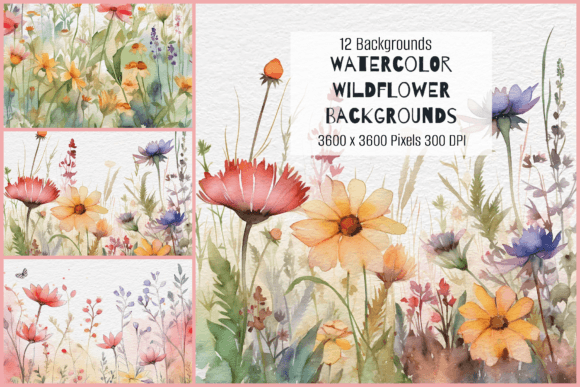
There's a certain magic in the imperfect bleed of watercolor on paper. It feels organic, handcrafted, and full of life. When that technique is applied to the delicate forms of wildflowers, you get a design asset that's both versatile and emotionally resonant. These Watercolor Wildflower Backgrounds aren't just decorative patterns; they are textured canvases that bring a touch of nature's artistry to any project. Each of the twelve included JPGs, rendered at a crisp 300 DPI, captures the soft, flowing gradients and subtle grain unique to watercolor, creating a backdrop that feels both professional and deeply personal.
The Organic Appeal for Modern Design
The visual personality of this collection is rooted in its authenticity. Unlike flat, digitally perfect vectors, these backgrounds have depth. You'll see soft washes of color that blend seamlessly, delicate leaf details that aren't overly sharp, and floral motifs that feel sketched rather than stamped. This style is the antithesis of sterile, corporate design. It communicates warmth, creativity, and a connection to the natural world. For a brand, this can be a powerful tool. A watercolor wildflower background on packaging or a website header instantly sets a tone that is approachable, artisanal, and trustworthy. It tells a story before a single word of copy is read.
This aesthetic aligns perfectly with several current design movements. It speaks to the desire for more human-centric, less algorithmic visuals. Whether you're working on a brand identity for a local florist, a skincare line, or a boutique consultancy, these backgrounds provide a foundation that feels premium and thoughtful. They are a form of modern typography in their own right—not a font, but a visual language that complements and elevates text.
Practical Applications Across Creative Fields
The true value of a design asset lies in its application. These Watercolor Wildflower Backgrounds are built for cross-platform consistency. Their square format (3600 x 3600 pixels) is ideal for a multitude of projects, especially in the digital realm. Here’s how different professionals can leverage them:
- Digital Marketers & Content Creators: Use them as the base for social media graphics on Instagram and Pinterest. They make stunning story backgrounds, quote cards, or carousel post foundations that stop the scroll. For bloggers, they are perfect for creating cohesive, beautiful feature images that match a post's theme.
- Small Business Owners & Entrepreneurs: Integrate them into your packaging design and branding. They work wonderfully for product labels, thank-you card inserts, and the background of your Etsy shop banner or website hero image. This builds immediate visual recognition and a cohesive brand identity.
- Designers & Publishers: These are excellent design assets for editorial design. Use a faded version as a subtle texture behind magazine layouts, or a bolder section for a book cover or album artwork. They provide a ready-made texture that saves hours of creation time in Photoshop.
- Crafters & Hobbyists: The possibilities for personal projects are endless. Create unique scrapbooks, custom greeting cards, personalized wall art prints, or even decorative stickers. The high resolution ensures they look sharp when printed at home or through a professional service.
Integrating Backgrounds into a Cohesive Visual System
Using a background effectively is about more than just placing it behind text. It's about creating a visual hierarchy. A busy wildflower pattern can overwhelm a design if not handled with care. The key is to use it strategically. For text-heavy applications like a website banner or a poster, consider using the background at a reduced opacity or selecting a less dense section of the image. Pair it with clean, legible typefaces—a simple sans serif font for body text or a elegant serif font for headlines often works beautifully. This contrast ensures your message remains clear while the background provides atmosphere.
When choosing which of the twelve backgrounds to use, consider your project's color palette and mood. Some may feature soft pastels perfect for a springtime promotion, while others might have deeper, richer tones suitable for an autumnal feel. Always test your chosen background with your specific text and other design elements. Does the text remain readable? Does the background enhance or compete with your main content? This simple evaluation is crucial for maintaining professionalism.
Because these are provided as high-quality JPG files, they are incredibly flexible. You can easily crop them to different aspect ratios, overlay other design elements, or apply filters in a program like Canva or Photoshop to match your exact color scheme. This compatibility with tools like Canva makes them accessible to professionals and hobbyists alike, democratizing high-quality design. Ultimately, these Watercolor Wildflower Backgrounds are more than just pretty pictures; they are versatile tools for building recognizable, engaging, and beautifully consistent creative work across any medium.