US Civil War Digital Paper Backgrounds for Authentic Projects
More Than a Texture: Capturing a Moment in Time
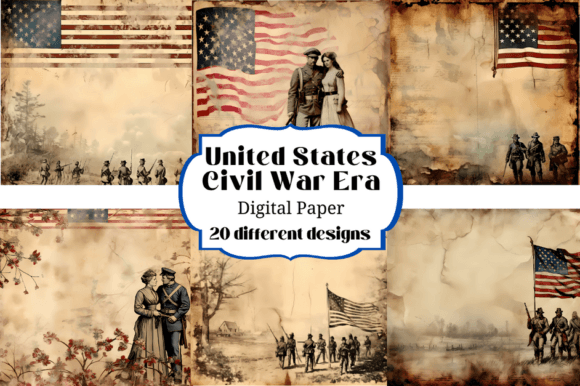
When you’re working on a project that needs to feel authentic, a generic background simply won’t cut it. You need something with history, with grit, and with a story to tell. That’s precisely what you get with a curated collection of US Civil War Digital Paper Backgrounds. This isn't just a set of random textures; it's a toolkit for creators who want to evoke a specific, powerful era. Think of the visual language of the 1860s: the aged parchment of a soldier's letter home, the stark typography of a newspaper headline announcing a battle, the faded map lines tracing troop movements, and the solemn portraiture of the time. This collection captures that entire personality, offering 20 distinct illustrations that serve as a foundation for historical and vintage-themed design.
The appeal of these backgrounds lies in their inherent character. They are not sterile or overly polished. Instead, they carry the visual weight of their inspiration. You’ll find textures that mimic worn paper, subtle stains, and the kind of gentle decay that only time can create. The color palettes are intentionally muted and period-appropriate—think sepia tones, aged creams, deep browns, and the occasional faded blue or grey. This authenticity is what makes them so valuable. They provide an instant sense of place and time, allowing your content to feel grounded in a rich historical context. For a designer, this is a powerful shortcut to creating an immersive visual experience.
Practical Applications for Modern Creators
So, where do these assets truly shine? The versatility of a well-made digital paper pack is one of its greatest strengths. For the scrapbooker or junk journal enthusiast, these backgrounds are the perfect base layer. They instantly transform a modern photo into a historical keepsake when used as a page background or a decorative border. Imagine a family photo with a Civil War-era map texture subtly layered behind it, or a journal entry written over the faint impression of a vintage newspaper. The storytelling potential is immediate and profound.
Beyond personal crafts, the commercial applications are extensive. For small business owners and entrepreneurs, these backgrounds can be integral to building a unique brand identity. A distillery, a historical tour company, a bespoke leather goods maker, or an author of historical fiction could use these textures in their logo design, packaging, and marketing materials to instantly communicate heritage, craftsmanship, and tradition. In packaging design, a background that evokes an old battlefield map or a soldier’s diary can set a product apart on the shelf, telling a story before the customer even picks it up.
Digital creators will find them equally useful. Bloggers can use them to create custom headers for articles about history, genealogy, or vintage lifestyle. Marketers can develop eye-catching social media graphics that stand out in a sea of clean, minimalist posts. The textured, rich feel of these backgrounds adds a layer of depth and seriousness that can increase engagement. For publishers, these are ideal design assets for book covers, chapter headers, or interior page layouts in historical non-fiction or period novels. They function as a powerful display font equivalent for your page’s entire canvas, setting a dominant, atmospheric tone.
Integrating Historical Textures into a Modern Workflow
Working with these digital papers is straightforward, especially given the professional specifications of this collection. As 300 DPI PNG files, they are print-ready and offer high resolution for detailed work. The fact that they are separate image files in a single zip, clearly labeled, means you can quickly scan and select the right texture without guesswork. The ability to easily resize them is crucial; you can scale a texture to fill a large poster or shrink it to become a subtle element in a web banner without losing quality, thanks to the high DPI.
A key design consideration is how to pair these textured backgrounds with typography. Because the backgrounds are visually complex, you’ll want to choose typefaces that are legible and provide a clear hierarchy. A clean sans serif font often works beautifully for body text, offering a modern contrast to the historical texture. For headlines, a strong serif font or even a period-inspired script font can complement the theme, but it must remain readable. The goal is balance. Let the background provide the atmosphere while your typography delivers the message with clarity. Avoid using overly ornate or handwritten font styles for large blocks of text, as they can become lost in the texture.
When evaluating if these backgrounds are the right fit for your project, consider the emotional tone you need to set. They are perfect for conveying seriousness, history, legacy, authenticity, and a handmade feel. They might not be the best choice for a project that needs to feel futuristic, ultra-clean, or playful. Test them by placing your core content—a logo, a photo, a block of text—over a few different options from the set. See how the interaction feels. Does the texture support your message or compete with it? Often, reducing the opacity of the background layer can help it serve as a supportive element rather than a dominant one.
Ultimately, this collection of US Civil War Digital Paper Backgrounds is more than just a set of files. It’s a bridge to the past, a tool for storytelling, and a means to add unparalleled depth to your creative work. Whether you’re designing a brand’s entire visual system, crafting a personal memory book, or creating a compelling marketing campaign, these assets provide a foundation of authenticity that is difficult to replicate from scratch. They empower you to create with a sense of history and purpose, making your projects not just seen, but felt.